Download The App


Our blog
Insights from MyTherapist.ng
Updates about teams news, articles from MyTherapist.ng Team
Surviving the Ember Months
September lands and the whole country tightens. Why the ember months feel like this, what is real and what is dread, and how to get to January intact.
Nightmares That Won’t Stop
When bad dreams become a pattern you dread going to bed for. What drives recurring nightmares, and the rehearsal technique with the best evidence.
WhatsApp After Hours: Boundaries With Work
The group is active at 11pm and everyone is replying. How to stop your job living in your pocket without becoming the person who is hard to reach.
Sleep Paralysis: Ogun Oru or Sleep Disorder?
Awake, unable to move, something in the room. What sleep paralysis actually is, why the spiritual reading is so widespread here, and how to reduce it.
Saying No at Work Without Burning Bridges
Actual sentences for declining work, pushing back on a deadline and protecting your evening — written for Nigerian offices, where hierarchy is real.
Dissociation: Feeling Unreal or Far Away
Watching yourself from outside. The world looking flat or fake. Losing time. What dissociation is, why it happens, and when it needs treating.
Sexual Harassment at Work: Your Options
What counts, what the law says, how to document it, and how to protect your mental health — whether you report it, leave, or are not ready to do either.
Hoarding: When Keeping Things Takes Over
Not untidiness, and not laziness. Why hoarding is a recognised disorder, why throwing things away for someone makes it worse, and what actually helps.
Workplace Bullying and ‘Oga’ Culture
Public dressing-downs, impossible demands, and a hierarchy that calls it training. Recognising workplace bullying in Nigeria and what you can do about it.
Hair Pulling and Skin Picking, Explained
You do it without noticing, then hide the evidence. Trichotillomania and skin picking are recognised conditions with real treatment — not bad habits.
Remote Work Loneliness in Nigeria
Good salary, no commute, and you have not spoken to anyone since Tuesday. Why remote work gets lonely in Nigeria, and what actually fixes it.
Body Dysmorphia: When the Mirror Lies
Hours lost to a flaw nobody else can see. What body dysmorphic disorder is, why reassurance and surgery never settle it, and the treatment that works.

Tech Layoffs and What They Do to You
Six weeks ago you were building the roadmap. Now you are in a spreadsheet. Surviving a tech layoff in Nigeria without losing your nerve or your head.
Postpartum Psychosis Is a Medical Emergency
Rare, sudden, and a genuine emergency. The signs of postpartum psychosis, how it differs from baby blues, and why it must never wait until morning.
Founder Mental Health: The Cost of Building
Payroll you cannot make, investors you cannot disappoint, and nobody to tell. What building a company in Nigeria costs mentally, and what protects you.
PMDD: When PMS Is Something Worse
Two weeks of every month you are not yourself, then it lifts. PMDD is a recognised condition, not a bad attitude — and it is treatable once identified.
Teachers’ Mental Health in Nigeria
Overcrowded classes, late salaries, and being expected to raise other people’s children. What teaching costs mentally, and what actually helps.
Bipolar I vs Bipolar II: The Difference
Bipolar II is not a milder bipolar I. The difference is mania versus hypomania — and it changes the diagnosis, the treatment and how long it takes to spot.
House Officers: Surviving Medical Training
Thirty-six hour calls, hostile seniors, and a culture that treats exhaustion as training. Mental health for Nigerian house officers and residents.
Borderline Personality Disorder, Explained
Intense relationships, sudden emotional swings, a shaky sense of self. What BPD is, why the label carries stigma, and why it responds to treatment.
Bankers and Burnout: Nigeria’s Hardest Desks
Targets, 7am to 9pm, and a resignation letter you cannot afford to send. Burnout in Nigerian banking — what it costs, and what can actually change.
Intrusive Thoughts: Why Your Mind Goes There
Violent, sexual or blasphemous thoughts you would never act on. Why almost everyone has them, why yours stick, and why fighting them makes them louder.
Impostor Syndrome in Nigerian Workplaces
Waiting to be found out, despite the results. Why impostor feelings persist, what fuels them in Nigerian offices, and what actually shifts them.
Heat in the Body: Anxiety’s Physical Signs
“Heat in my body.” “My heart is cutting.” “Pepper in my head.” Anxiety often shows up physically first in Nigeria — and gets treated as everything else.
Job Loss and Who You Are Without Work
Losing a job takes more than income. What it does to identity, routine and standing — and how to get through the first months without losing yourself.
Health Anxiety: When You Fear Every Symptom
Googling symptoms at 2am, another test, another clear result, no relief. What health anxiety is, why reassurance stops working, and what treats it.
Post-NYSC: Surviving the Job-Hunt Limbo
You passed out, everyone congratulated you, and then nothing. The mental health of the Nigerian job hunt, and how to get through it intact.
Panic Disorder: When Panic Keeps Returning
A panic attack is an episode. Panic disorder is the condition — the fear of the next one. How to tell them apart, and what treatment actually works.
Black Tax: Helping Family Without Losing You
The calls, the transfers, the guilt when you say no. What supporting your family costs mentally, and how to keep giving without going under.
Postnatal Depression in Nigerian Fathers
Fathers get postnatal depression too — and nobody asks them. The signs in Nigerian men, why it is missed, and what helps.
Coming Home: Life After You Japa Back
Nobody warns you that returning is harder than leaving. Reverse culture shock, the shame of coming back, and how to rebuild a life in Nigeria again.

Perimenopause, Menopause and Your Mind
Anxiety, rage, brain fog and sleeplessness in your forties are often hormonal, not a breakdown. What perimenopause does to mental health, and what helps.
Supporting Older Parents Through Ageing
Your parents are getting older and the roles are quietly reversing. What that does to them, what it does to you, and how to handle it better.
Grief After Pregnancy Loss or Stillbirth
A loss most people never knew about, mourned by parents who are told to move on. Grief after miscarriage and stillbirth in Nigeria, and where to get help.
Recognising Domestic Abuse and Getting Help
Abuse is not only physical. How to recognise it, how to plan for your safety, and where to get help in Nigeria — including if you are not ready to leave.
Grief After Losing a Parent in Nigeria
You organised the burial, fed the visitors and held everyone together. Then everyone left. Grief after losing a parent in Nigeria, and why it hits later.
Infertility and Mental Health in Nigeria
The waiting, the questions at every family gathering, the blame that lands on women. What infertility does to mental health in Nigeria, and what helps.
Eating Disorders in Nigeria: Beyond the Myth
“That is a white people’s illness.” Why that belief keeps Nigerians undiagnosed, what eating disorders actually look like here, and how to get help.
Single Parenting and Mental Health in Nigeria
Doing it alone in a country that assumes two. The mental load of single parenting in Nigeria, the stigma nobody names, and what genuinely helps.
Autism in Nigeria: Signs, Diagnosis, Support
What autism actually looks like in Nigerian children and adults, how diagnosis works here, and why late diagnosis in adults is rising. Myths addressed.
Caregiver Burnout: When You’re the Strong One
In Nigerian families, one person usually carries everyone. Signs of caregiver burnout, why guilt keeps you in it, and what changes when you name the load.
Insomnia: When You Can’t Sleep or Switch Off
Clinical insomnia is not the same as bad sleep habits. What it is, why sleeping tablets stop working, and why CBT-I is the first-line treatment in Nigeria.
NYSC and Your Mental Health: A Survival Guide
Camp, redeployment, a strange town and no friends. A practical guide to protecting your mental health through NYSC — from registration to passing out.
What Therapy Costs in Nigeria in 2026
Therapy in Nigeria costs ₦4,000–₦80,000 a session, median ₦20,000. A current, honest breakdown — student rates, HMO cover and employer-paid options.
HMO-Covered Therapy in Nigeria: How to Use Your Health Plan to Pay for Sessions
Some Nigerian HMOs now pay for therapy. Learn how to check your plan, which HMOs work on Mytherapist.ng, and how to book a session at ₦0 out of pocket.
Childhood Trauma and How It Shows Up in Adults
Childhood trauma in adults often hides as anxiety, people-pleasing or trouble trusting. Learn the signs — including harsh discipline — and how to heal.
Tramadol and Codeine Addiction in Nigeria
Tramadol and codeine addiction is a growing crisis in Nigeria. Learn the warning signs, withdrawal risks, and where to get real help and recovery.
Sports Betting Addiction: When It Stops Being Fun
Betting addiction is a real mental-health condition, not weak willpower. Spot the warning signs, understand why it grips young Nigerians, and get help.
Alcohol Addiction in Nigeria: Signs and Help
Alcohol addiction is Nigeria’s most common and most normalised substance problem. Learn the warning signs, when to worry, and where to get help.
Licensing and CPD for Therapists in Nigeria
Nigeria has no single licensing board for therapists—counsellors, psychologists and psychiatrists register separately. Here’s each path, plus CPD.
Teenage Mental Health: A Nigerian Parent’s Guide
A Nigerian parent’s guide to teenage mental health: spot the warning signs, start the conversation, and know when to get professional help.
Men’s Mental Health in Nigeria: Breaking the Silence
Men’s mental health in Nigeria is real and treatable — depression and burnout often hide as anger. Learn the signs and find private, affordable help.

Should You Join an Online Therapy Platform?
Joining an online therapy platform means steady clients and no admin—but you share each fee. An honest breakdown for Nigerian therapists.
How to Build a Private Therapy Practice in Nigeria
How to start a private therapy practice in Nigeria: register with a body, price sessions in Naira, stay ethical, and find your first clients.
Burnout in Nigerian Helping Professions
Therapist burnout in Nigeria hits doctors, nurses and counsellors hard. Learn the warning signs, local causes, and practical ways to recover.
Mental Health Emergency in Nigeria: What to Do
In a mental health emergency in Nigeria, call 112 now, or MANI’s free 24/7 crisis line. Learn what counts as an emergency and exactly what to do tonight.
An HR Guide to Employee Mental Health Benefits in Nigeria
Employee mental health benefits in Nigeria: what an EAP covers, choosing a provider, budgeting in Naira, and confidentiality. A practical HR guide.
How to Support an Employee Who Is Struggling
How to support an employee with mental health struggles: what to say, what to avoid, how to hold boundaries, and when to refer for professional help.
How Long Does Therapy Take to Work?
Most people feel real change within 15–20 therapy sessions, some sooner. How long therapy takes to work by concern, and what speeds it up, in Nigeria.
How to Join Your Online Therapy Session on Mytherapist.ng
Learn how to join your online therapy session on Mytherapist.ng: when the Join button appears, how to start the video or audio call, and camera/mic fixes.
Therapy or Medication: Which Do You Need?
Should you try therapy, medication, or both? Here is how the decision is actually made in Nigeria, who prescribes what, and how to take the first step.
How to Choose the Right Therapist in Nigeria
Choosing a therapist in Nigeria comes down to six things: specialty, licence, format, language, price and fit. Here is how to match all six and book well.
Will My Employer Know I Used Therapy?
If your company pays for therapy, can they see it? No — they confirm a benefit was used for billing, never what you discussed. Here is how it works.

Is Online Therapy Confidential in Nigeria?
Yes — online therapy in Nigeria is confidential and legally protected. Here is exactly who can see your sessions, and the narrow limits, explained plainly.
How to Book a Therapy Session Through Your Employer or HMO
Book a therapy session covered by your employer’s benefit or your HMO on Mytherapist.ng — pick your plan at checkout, book at ₦0 to you, and we confirm your cover.
How to Book a Therapy Session Online in Nigeria (Step-by-Step)
Learn how to book a therapy session online in Nigeria with Mytherapist.ng — sign up, pick a verified therapist, choose a time, pay securely, and start.
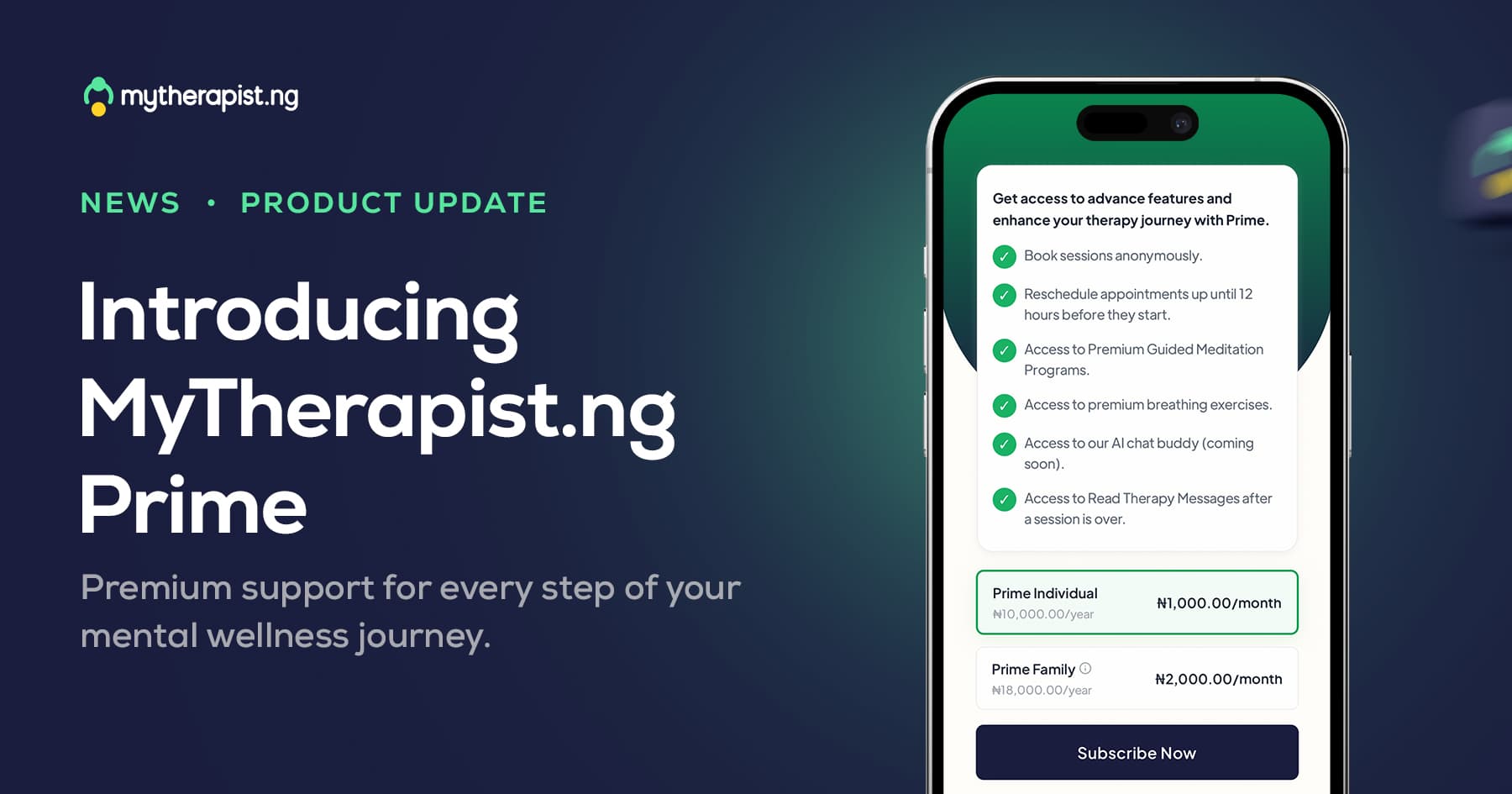
Introducing Mytherapist.ng Prime — Therapy That Goes Further
Meet Mytherapist.ng Prime — premium meditations, exclusive breathing exercises, anonymous booking and fee-free rescheduling. See what it does and how to join.
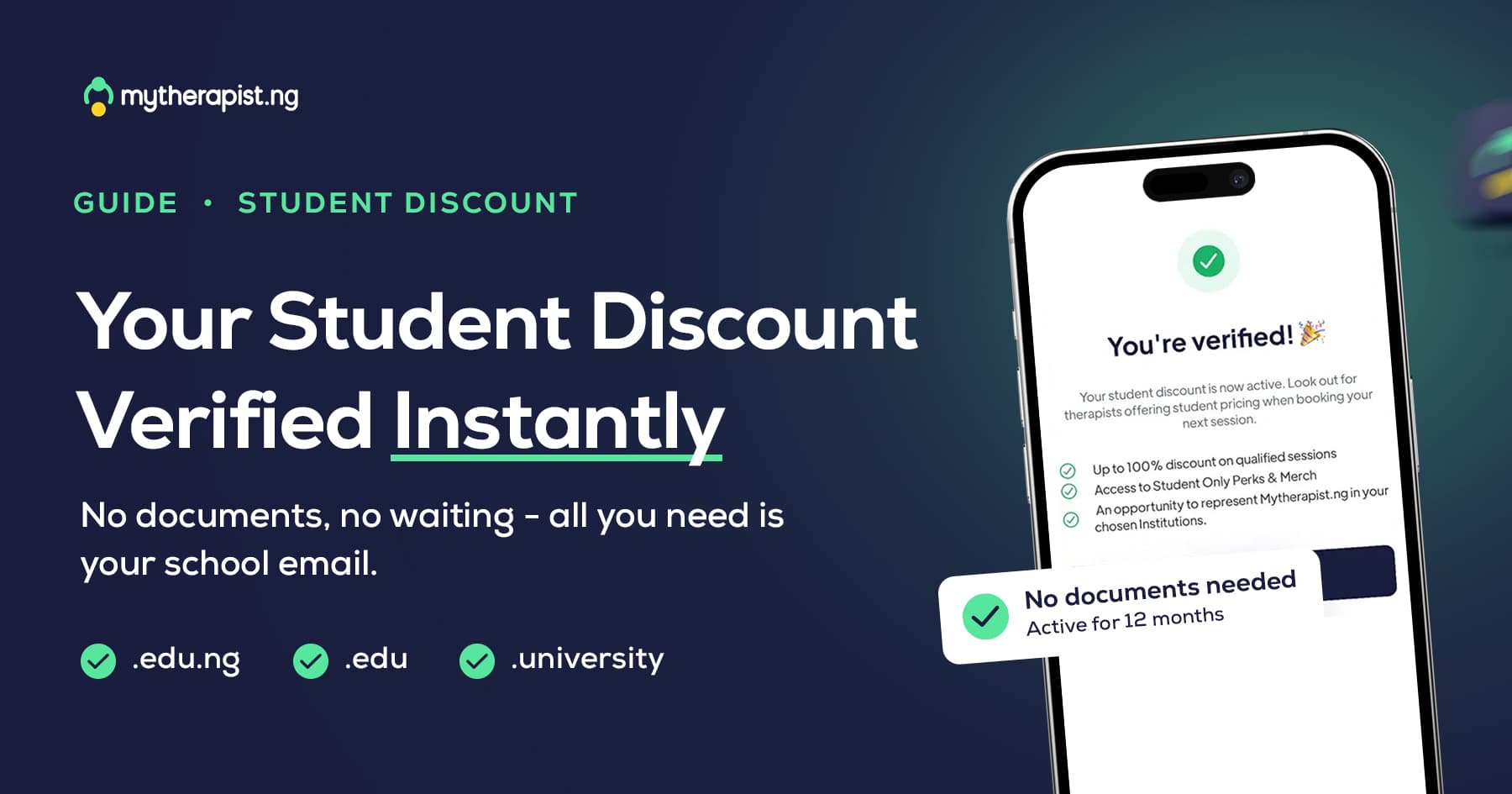
Verify Your Student Discount on Mytherapist.ng — Instantly, With Just Your School Email
Got a school email ending in .edu.ng, .edu or .university? You can now verify your student status on Mytherapist.ng in two minutes and pay less for therapy.
Japa Stress: The Mental Health Toll of Relocating Abroad (and How to Cope)
Relocating abroad — japa — is exciting, but it can quietly take a toll on your mental health. Here’s how to spot japa stress and cope, before and after you move.
Mental Health Stigma in Nigeria: Why We Don’t Talk About It — and How to Start
Mental health stigma keeps millions of Nigerians suffering in silence. Here’s where it comes from, the harm it does, and how we can start changing the conversation.
How to Get Affordable Therapy in Nigeria: Free & Low-Cost Options
Think therapy is too expensive? Here’s a practical guide to affordable and free mental health support in Nigeria — from ₦3,000 sessions to HMO cover and student discounts.
Workplace Burnout in Nigeria: Signs You’re Running on Empty (and What to Do)
Long hours, tough commutes and economic pressure make burnout common in Nigeria. Learn the signs you’re running on empty — and practical ways to recover.
Bipolar Disorder in Nigeria: Signs, Myths, and Getting Help
Bipolar disorder is widely misunderstood in Nigeria. Learn the real signs, the myths that cause harm, and how therapy and support can help you live well.
How to Choose the Best Online Therapy Platform in Nigeria
Online therapy has made mental health support far more accessible in Nigeria. Here’s what to look for when choosing a platform — and the questions worth asking.
Exam Stress: A Student’s Guide to Managing JAMB, WAEC & University Pressure
JAMB, WAEC and university exams pile on the pressure. Here’s how Nigerian students can manage exam stress and anxiety — and study smarter, not just harder.
Postpartum Depression: Why New Nigerian Mothers Struggle in Silence
Postpartum depression is common, real, and treatable — yet many Nigerian mothers suffer quietly. Learn the signs, why it’s overlooked, and how to get help.
Financial Anxiety: Coping With Nigeria’s Cost-of-Living Stress
Rising prices and money worries are taking a mental toll across Nigeria. Learn to recognise financial anxiety and practical ways to protect your mental health.
Substance Abuse in Nigeria: Recognising Addiction and Where to Get Help
Substance abuse is a growing concern in Nigeria. Learn to recognise the signs of addiction, understand what drives it, and where to find confidential help.
Online vs In-Person Therapy: Which Is Right for You?
Should you choose online or in-person therapy? Here’s an honest comparison of cost, convenience, privacy and effectiveness to help you decide.
Recognising an Eating Disorder: Signs, Types, and Support in Nigeria
Eating disorders are often hidden and misunderstood in Nigeria. Learn the signs, the main types, and how to find compassionate, professional support.
Does Your HMO Cover Therapy? Using Health Insurance for Mental Health in Nigeria
Many Nigerians don’t realise their HMO may cover mental health. Here’s how to check your health insurance and use it for affordable therapy.
Therapy and Faith: Can a Religious Nigerian Go to Therapy?
Can you be deeply religious and still go to therapy? For many Nigerians the answer feels complicated. Here’s how faith and professional support can work together.
OCD Is More Than Being Neat: What It Really Looks Like
“I’m so OCD” gets thrown around a lot — but real OCD is far more than liking things tidy. Here’s what obsessive-compulsive disorder actually looks like.
Signs of Depression in Men: What to Look For
Depression often looks different in men — showing up as anger, withdrawal, or overwork rather than sadness. Here are the signs to watch for, and where to get help.
Social Anxiety: More Than Just Being Shy
Social anxiety is more than shyness — it’s an intense fear of judgement that can shrink your world. Learn the signs and how therapy can help you feel free again.
What Is Generalised Anxiety Disorder (GAD)?
If you worry about everything, all the time, it may be more than stress. Learn what generalised anxiety disorder is, its signs, and how to find relief.
ADHD in Adults: Signs You May Have Missed
Many adults live for years with undiagnosed ADHD, blaming themselves for being “lazy” or “scattered”. Here are the adult signs — and how support can change things.
ADHD in Children: A Nigerian Parent’s Guide
Is your child “stubborn”, or could it be ADHD? Learn the signs of ADHD in children, why it’s often misunderstood in Nigeria, and how to support your child.
Coping With Grief and Loss in Nigeria
Grief has no timeline and no “right” way. Learn how to cope with loss, when grief may need support, and how counselling can help you carry it.
Understanding Mood Disorders: More Than Just Moody
Mood disorders are more than ordinary ups and downs. Learn what they are, the main types, and how therapy can help you find stability.
Personality Disorders Explained (Without the Stigma)
Personality disorders are widely misunderstood and heavily stigmatised. Here’s a clear, compassionate explanation — and how treatment helps.
Schizophrenia: Facts vs Myths in Nigeria
Few conditions are as feared or misunderstood as schizophrenia. Let’s separate the facts from the myths — and show how support helps people live well.
Adjustment Disorder: When Big Life Changes Overwhelm You
A job loss, move, breakup or bereavement can hit harder than expected. Learn about adjustment disorder — and how short-term therapy helps you regain your footing.
High-Functioning Depression: When You Look Fine but You’re Not
You go to work, meet deadlines, and smile — but inside you feel empty. High-functioning depression is real. Here’s how to recognise it and get help.
How to Sleep Better for Your Mental Health
Poor sleep and poor mental health feed each other. Learn practical, realistic ways to sleep better — and protect your mind in the process.
Anger Management: Techniques That Actually Work
Anger is normal — but when it controls you, it damages relationships and health. Learn practical anger-management techniques and when to seek support.
How to Set Healthy Boundaries (Without Guilt)
Struggle to say no? Healthy boundaries protect your mental health and your relationships. Learn how to set them — even when it feels uncomfortable.
Overcoming Loneliness in Lagos and Beyond
You can be surrounded by millions of people and still feel completely alone. Learn why loneliness hurts, and practical ways to rebuild connection.
How to Build Self-Esteem and Confidence
Low self-esteem can quietly shape every decision you make. Learn practical ways to build genuine confidence and a kinder relationship with yourself.
Mindfulness for Beginners: A Simple Guide
Mindfulness doesn’t require hours of meditation or a mountain-top. Learn what it really is and simple ways to start calming your mind today.
AS SEEN ON





This is your sign to put yourself first.
Start therapy today — the relief you deserve is just a few taps away.